by Dr. Heath McKinley
Share
by Dr. Heath McKinley
Share
Why I Predict Sleep Improvements Before They Happen
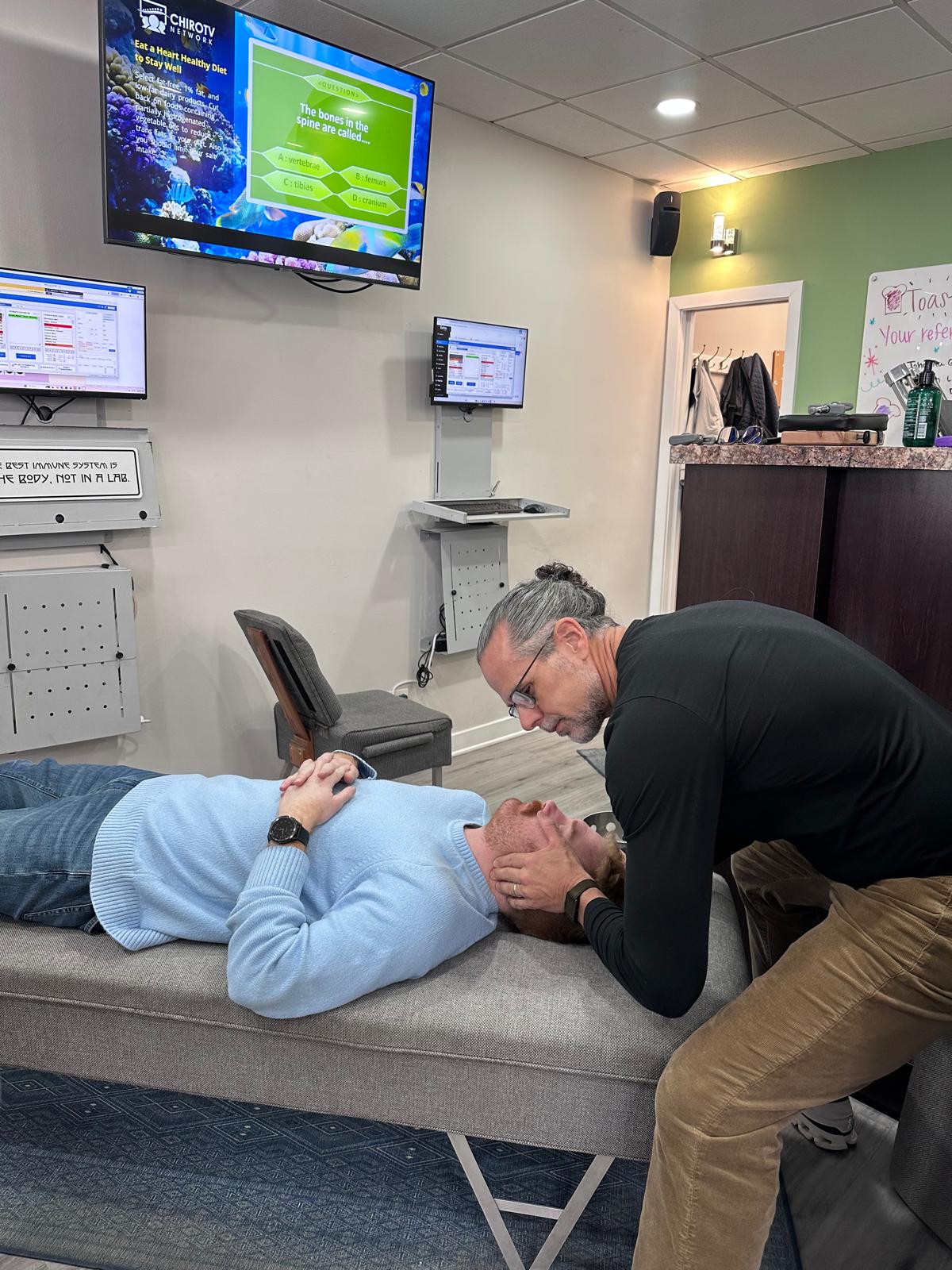
They came in for migraines. Or low back pain. Or sciatica. I tell them their sleep is going to improve in the first week, sometimes within days. They nod politely, maybe a little skeptical, because that’s not why they’re here.
Then it happens exactly like I said it would.
They wake up fewer times during the night. The morning stiffness that’s been there for years just… isn’t. They have energy at 7am without needing two cups of coffee first. And when they come back in, they’re either thrilled or stunned. Sometimes both.
I’ve been doing this for 25 years. The prediction part isn’t magic. It’s pattern recognition backed by an understanding of how the nervous system actually works.
Most People Don’t Know Their Sleep Is Bad Anymore
Here’s what I see almost every day: someone comes in with a chronic condition. Migraines, anxiety, ADHD, autoimmune issues, doesn’t matter. Their sleep is usually terrible. But they’ve had it that way for so long they don’t even realize it anymore.
They think it’s normal to wake up once or twice every night.
They think it’s normal to feel stiff in the morning even though they’re only 35.
Normal and common are two different things. Waking up multiple times, needing 20 minutes to feel loose enough to move in the morning, relying on ibuprofen or sleep aids: these things are common. They’re not normal.
When you’ve been sleeping poorly for years, you adapt. Your baseline shifts. You forget what good sleep actually feels like. So when I tell someone on their first visit that their sleep is going to improve, they’re polite about it. Some get excited, especially athletes or entrepreneurs who understand the performance value of recovery. Others just shrug. They think their sleep is fine.
Either way, it improves. And when it does, that’s when the real conversation starts.
The Fuse Box That Controls Everything
Sleep is where we recharge the most. When you’re measuring energy and electricity in the body (which is exactly what we’re doing with neuromuscular tone and EMG scanning), sleep becomes the most important recovery window you have.
Think of your nervous system like a fuse box. There are 31 pairs of nerve roots that exit your spine. When those nerves get compressed or irritated because of spinal misalignments, the signal weakens. It’s like a flickering light in your house. The wiring isn’t broken, but something’s blocking the flow.
The adjustment removes that interference. We’re not healing you. We’re clearing the path so your body can do what it already knows how to do.
Here’s the part most people don’t connect: the same nerves that control your back also control your gut, your diaphragm, your heart rate, your sleep cycles. When there’s compression at certain spinal segments (say, T9), you’re not just dealing with localized pain. That nerve supplies your diaphragm, the muscle that helps you breathe. So when that nerve isn’t working right, your breathing gets affected even when you don’t realize it.
If you’re holding 20% more tension than you should throughout the day, you’re not breathing efficiently. That creates stress in your body even when you’re not emotionally stressed. You’re just not taking in as much oxygen with every breath. That can show up as anxiety. Or poor sleep. Or both.
Remove the interference, and the whole system recalibrates.
What Happens in Week One
In the first week, I’m watching for specific changes. Range of motion improves. Left-right symmetry gets better. Hip flexion, cervical spine: all that neuromuscular tone significantly affects how easily you move. When patients see that things are easier, not just less painful, they start to understand that something physiological is changing.
But the sleep changes? Those happen fast.
Patients tell me they’re waking fewer times during the night. Morning stiffness that’s been there for years just isn’t anymore. They have energy at 7am without needing two cups of coffee first.
According to the National Sleep Foundation, nearly one-third of people who undergo a chiropractic adjustment experience an immediate improvement in sleep. That matches what I see clinically.
For patients who happen to be wearing a Whoop or Oura Ring, the data confirms it. REM and deep sleep scores improve almost immediately. HRV (heart rate variability), which measures how well your nervous system is adapting to stress, takes a little longer to stabilize. I tell them to track that in 30-day cycles rather than day-to-day.
We remeasure the EMG scans after about 30 days to see the clinical progress. But patients feel the difference long before any device tells them.
The Migraine Patient Who Hadn’t Slept Through the Night in 20 Years
I had a patient come in with severe migraines they’d had since they were a teenager. It had affected their college sports. They’d managed it by avoiding loud noise, backing off certain workouts, changing their social life. When they felt the aura coming, they knew they had to cancel plans. They were on Imitrex and had been for years.
Now in their 30s, high-level sales job, lots of travel. They needed their body to adapt faster. And they wanted to start a family, which meant getting off the medication.
Before we even started care, I told them what to expect. The timeline for migraine relief. The secondary improvements they’d see. And, like I do with everyone, I predicted their sleep would improve first, especially as a migraine sufferer.
Migraine patients are some of the worst energy users out there. Their trapezius muscles are constantly squeezing. It’s like putting your foot on a garden hose: the flow gets restricted. That’s what’s happening to all those delicate nerves around the neck. They supply blood flow to the vessels that pump blood into the brain. When there’s constriction, it creates extra viscosity. That’s where the pounding pressure comes from.
This patient was stunned. I had told them their sleep would improve before we even started. But they hadn’t slept through the night in over 20 years. It happened after their first or second adjustment. Not every night at first, but three or four nights a week within the first month.
Twenty years of broken sleep. Then four full nights a week within 30 days.
When they felt that difference, the positive expectations went through the roof. They got off the medications. They were less stressed about pregnancy complications. One of my favorite stories.
When the Wearable Confirms What I Already Told You
For patients already using wearables, here’s where it gets interesting.
Whoop and Oura Ring send out monthly reports that break down your stats and show you which habits had the greatest impact on your recovery and sleep quality.
Usually in the top one or two: chiropractic adjustment.
When patients bring that report into the office and show me, it’s not news to me. I told them from the beginning. But seeing confirmation from an outside source that had nothing to do with our office? That makes it more compelling.
Those conversations look like celebrations. The office marks patient wins because adults need to hear they’re doing well, just like anyone does.
When an independent device confirms a clinical prediction I made weeks earlier, it validates what I’ve been observing for decades. Recent research shows that devices like the Oura Ring and Whoop display high agreement with gold-standard ECG measurements for HRV, meaning these consumer tools are actually reliable for tracking nervous system changes. A multisite clinical study of 539 adults found that after just one chiropractic adjustment, HRV measurements showed significant improvements in parasympathetic activity and total power, measurable nervous system balance.
You have to understand: when I started, people didn’t even know what organic food was, let alone going to doctors who don’t prescribe medication. We had to fight an uphill battle against a medical system that, back in the 1960s and 70s, taught young medical students that anything natural was quackery. In Wilk v. AMA (1987), the AMA was found guilty of conspiring to contain and eliminate the chiropractic profession. Now the whole world is looking for something different. And the technology is finally catching up to what we’ve known all along.
The Assembly Line Analogy
When I explain what’s happening during an adjustment, I tailor the analogy to who I’m talking to. If you’re analytical, you’ll get the EMG data and pre/post measurements. If you’re more visual or kinesthetic, you’ll get a story that clicks. Here’s one that works for most people.
Imagine an assembly line at work. Twelve people on the line. Three or four aren’t doing their job. The other nine have to pick up the slack. Eventually, they’re going to fatigue and compensate. The answer isn’t to push the nine harder. It’s to wake up the people who are being lazy.
That’s what the adjustment does. Certain vertebral segments get locked up, moving less efficiently. They’re in a natural cast. The adjustment restores proper motion along those segments and sends an impulse through the nervous system to make change, just like learning a new language. With time and repetition, the change sticks.
When there’s less wasted energy in the system, everything works better. Imagine flexing your bicep to show off for your niece or nephew. You’d do it for a few seconds, not 24 hours straight. But some people are holding that level of muscle tension all day, every day. They’re sore, tired, inefficient. They’re using energy they don’t need to use.
Once we start to make that change, all that energy gets redirected. The body can use it for other functions. And it always shows up in sleep first.
Not Everyone Should Start Tracking Right Away
One thing I’ll add: I’m not a big fan of people who aren’t already wearing wearables starting to use them right when they begin care in our office.
If I see someone wearing a Whoop or Oura Ring on their first visit, I’ll talk about it. If they’re not wearing one, it might come up in conversation. But I usually don’t recommend they start tracking right away.
For some people, new technology adds stress. They’re not great with it. The learning curve becomes one more thing to manage. Unless I can tell they’re comfortable with tech and it won’t emotionally stress them out, I’d rather they just pay attention to how they feel.
The data is great when you have it. But the experience matters more. If you’re not using a wearable, you’re not missing the core benefit. Improved sleep, reduced pain, and better energy are the real measure. The device just confirms what your body is already telling you.
So Why Do I Predict It?
Because the moment I tell someone their sleep is going to improve before it actually happens, I’m doing more than making a prediction. I’m giving them permission to believe their body can do something they’ve long since stopped expecting.
Most people have adapted to poor sleep for so long that they don’t even recognize it as a problem anymore. They think waking up twice a night at 35 is just aging. They think needing ibuprofen to fall asleep is normal. They’ve forgotten what their body is capable of when it’s actually functioning the way it’s supposed to.
When I predict the sleep improvement in advance, and then it happens exactly like I said, something shifts. They stop being skeptical. They start paying attention. They notice the digestion changes I mentioned. The cycle regulation. The reduced anxiety. The headaches that just… stopped.
And because I told them beforehand, they credit the treatment instead of dismissing it as coincidence.
That patient who hadn’t slept through the night in 20 years? They didn’t just get better sleep. They got their life back. They could travel for work without fear. Start a family without medication risks. Show up fully instead of managing around their limitations.
The wearable data is just confirmation of what we’ve known for decades. The nervous system controls everything. Remove the interference, and the body does what it was designed to do all along.
I predict sleep improvements before they happen because I’ve seen this pattern thousands of times. And every single time someone comes back in, stunned that it worked exactly like I said it would, I get to watch them realize something bigger: their body isn’t broken. It was just waiting for someone to clear the path.
I’m 51 years old. I compete in Hyrox races with times that match quality 30-year-old athletes: 1:10 in men’s doubles. I work out every day. I take zero prescription medications. Most of the people I used to play basketball with in my 30s and 40s can’t do those things anymore. They wake up stiff. They […]
Why Your Neck Pain Keeps Coming Back I’ve been doing this for 25 years in North Center. When someone walks into my office with neck pain that keeps returning, they’re usually frustrated. Not just because of the pain itself, but because of what it’s preventing them from doing: playing with their kids without wincing, getting […]