by Dr. Heath McKinley
Share
by Dr. Heath McKinley
Share
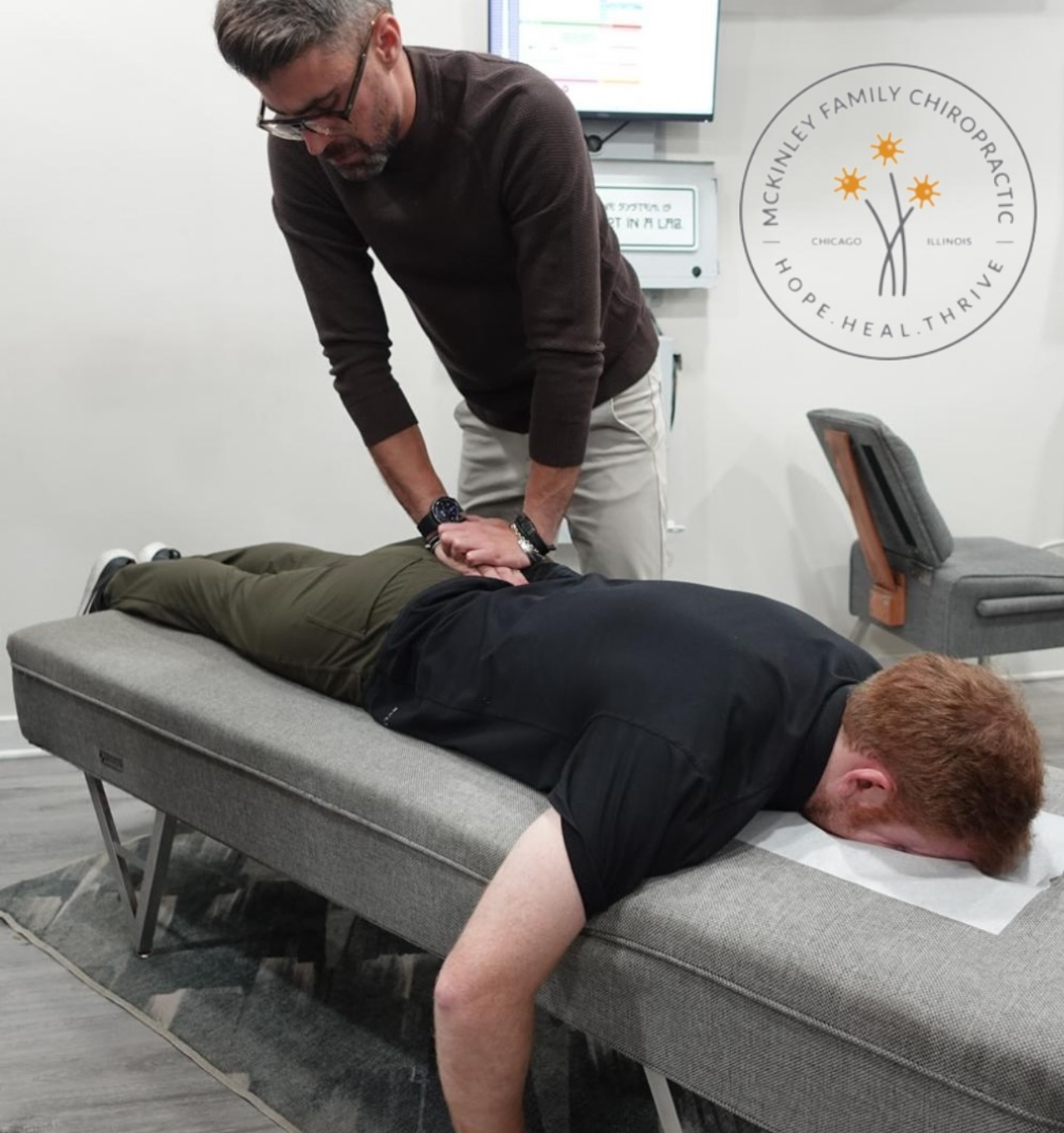
Why Most Sciatica Patients Are Told to Wait When Diagnosis Should Come First
Most sciatica patients are told to wait, take anti-inflammatories, and hope it gets better. If it doesn’t, they get sent to physical therapy. Then imaging. Then maybe a specialist who mentions cortisone or surgery.
Here’s what almost never happens: someone asks why the nerve is compressed in the first place.
That’s the diagnostic gap. And it costs people months they didn’t need to lose.
I’ve been treating sciatica for 25 years across Chicago and northern Illinois. And I’m still frustrated by the same pattern: patients come to me after months of waiting, medicating, and hoping, when the actual cause of their nerve compression was identifiable from day one.
Sciatica Is Almost Never an Acute Injury
When someone walks into my office and says they felt shooting pain down their leg when they bent over to pick up a sock, I know what they mean. That moment felt like the cause. It wasn’t.
Ninety-five percent of sciatica cases are the result of accumulation over months or years. The sock was the final straw.
I use a simple analogy with patients: just like a dentist, I’m looking at accumulation. Things built up over time until eventually there’s a problem, like a cavity forming from years of plaque buildup. The body is smart and gives you symptoms along the way, warning signs that something needs attention.
If bending over to pick up a sock were truly the cause, everyone who bent over would have sciatica. Healthy people should be able to do minor, unergonomically correct movements just fine. Otherwise we’d all be in trouble every single day.
So when I see a new patient, I start asking questions. Have you noticed stiffness in the morning over the last six months? Does it take five or ten minutes to loosen up when you get out of bed, compared to a few years ago?
The answer is almost always yes. Normal and common are two different things.
That’s the accumulation. The body has been giving signals: stiffness and tension. Most people ignore them or mask them with over-the-counter pain relievers. By the time the pain becomes unbearable, the problem has been building for a long time.
The Diagnostic Depth That’s Usually Missing
Most sciatica patients never get structural assessment or neuromuscular testing before treatment starts. That’s what I see missing when people finally come to our office.
In our office, we do more pre- and post-testing than any clinic I know of in Chicago. We take X-rays to assess structural alignment, looking for disc thinning, loss of lordosis, changes in the curves of the spine. We use EMG technology to measure neuromuscular tone, which tells us how much tension is present in the muscles surrounding the nerve roots.
Normal neuromuscular tone for low back musculature in a seated position is around five microvolts.
Someone with sciatica might measure 100, 150, even 200 microvolts at rest. Think of the body as an electrical system. When nerve roots get compressed, the signal weakens, like a flickering light in the house. And until we measure it, we’re guessing.
Here’s what I tell patients: if the tension is that high, even the smallest movement (bending over, twisting to grab something from the back seat) is going to compress the nerve. The movement didn’t cause the problem. The accumulated tension did.
When we identify that tension through diagnostics, we can address it directly. Without that step, treatment is reactive instead of targeted.
The MRI Artifact Problem
A lot of patients come to me after getting an MRI that shows a bulge or herniation. They’re scared. The imaging looks serious. And they’ve been told that the bulge is the cause of their pain.
I get it. When you see that on a screen, it’s alarming.
And honestly, that fear makes complete sense.
But here’s what I explain: the bulge is usually an effect, not a cause.
Studies show that more than 50% of asymptomatic people aged 30–39 have disc degeneration, height loss, or bulging. By age 60, imaging findings like herniation or stenosis are present in the majority of people, whether they have pain or not.
If the bulge were truly the cause of sciatica, then when you get better, we should be able to take another MRI and see it gone. But that’s not what happens. The bulge might change slightly, but it’s still there. And you’re pain-free.
That tells us the bulge was a structural artifact, something that accumulated over time, but not the direct cause of the nerve compression you’re experiencing right now.
What EMG gives us is real-time measurement of the neuromuscular tension that’s actively compressing the nerve. Imaging shows us structure. EMG shows us function. And that’s what adjustments address: we’re resetting the fuse box so the body can self-heal more efficiently.
The Physical Therapy Timing Problem
Physical therapy can be extremely helpful for sciatica. We do PT in our office. I recommend it all the time.
But timing matters.
A lot of patients get referred to PT or find stretches online (particularly the piriformis stretch) before anyone has addressed the underlying neuromuscular tension. The piriformis is a muscle that can compress the sciatic nerve when it’s irritated. Stretching it aggressively when the tension is still high often makes things worse.
Here’s the sequence that works: we reduce neuromuscular tension by at least 50% first through chiropractic adjustments. Then we add the more aggressive PT stretches.
When sciatica patients come to us after trying PT on their own and plateauing, the EMG usually shows that the underlying tension only improved by 10 or 20%. They felt a little better, so they thought it was working. But as soon as they stopped the stretches, the pain came back, sometimes worse than before.
That’s not a failure of PT. It’s a sequencing problem. The stretches were applied before the system was ready for them.
When we measure the tension drop to 50% or more, then add PT, the results are dramatically better. Patients recover faster, and the improvements hold.
Why the Referral Gap Matters
One of the first things I tell sciatica patients is how long recovery is going to take. For the vast majority of cases (even severe ones), we’re looking at six to eight weeks for resolution.
Less than 10% of sciatica cases require referral for severe stenosis or bone-on-bone degeneration. The rest resolve with chiropractic care. And the timeline is predictable because we’re measuring progress objectively, not just asking patients how they feel.
Here’s what frustrates me most: chiropractic assessment is almost never suggested before pharmaceutical or surgical intervention.
I’m not anti-medicine. My wife was an ER physician. I know there’s a time and place for medication and surgery. But when 60% of sciatica patients who failed other medical management benefit from spinal manipulation to the same degree as surgical intervention, why isn’t chiropractic offered first?
When I was in college, I had a serious disc injury. I went to an orthopedic institute. They recommended possible surgery or microdiscectomy after months of pain. My mother convinced me to come home and see the family chiropractor. Two adjustments later, I was fine.
I went back to the orthopedic and asked why no one had suggested chiropractic. The doctor said: “Kid, what we do is not an exact science. We just do the best with the information that we have.”
That was decades ago. And I’m still seeing the same pattern today.
Patients are told to wait six weeks. Then try PT. Then get imaging. Then consider injections or surgery. Conservative, diagnostic-driven chiropractic care is rarely part of that escalation pathway.
The standard protocol recognizes the six-to-eight-week window. But instead of using that time to identify and address the root cause, patients are told to rest and hope it resolves on its own.
It doesn’t make sense to me. Especially when the diagnostic tools exist to measure what’s actually happening.
What Patients Deserve
The wait-and-see protocol doesn’t make sense. Not when the diagnostic tools exist to measure what’s actually happening. Not when 6 to 8 weeks of targeted, diagnostic-driven care resolves the vast majority of cases.
I’m not suggesting chiropractic care replaces all other treatments. I know there’s a time and place for medication and surgery. I respect what conventional medicine does well.
But when less than 10% of sciatica cases actually need surgical referral, and when 60% of patients who failed other medical management benefit from spinal manipulation to the same degree as surgical intervention, the question isn’t whether chiropractic works. The question is: why isn’t diagnostic assessment offered before asking people to wait months in pain?
You have the right to ask for neuromuscular tension to be measured. You have the right to ask for structural assessment. You have the right to know what’s causing the compression, not just that it exists. And you have the right to treatment that addresses the actual problem.
That’s not radical. That’s basic clinical practice. And it should be the standard, not the exception.
The diagnostic gap isn’t inevitable. It’s a choice. And patients deserve better.

I’m 51 years old. I compete in Hyrox races with times that match quality 30-year-old athletes: 1:10 in men’s doubles. I work out every day. I take zero prescription medications. Most of the people I used to play basketball with in my 30s and 40s can’t do those things anymore. They wake up stiff. They […]
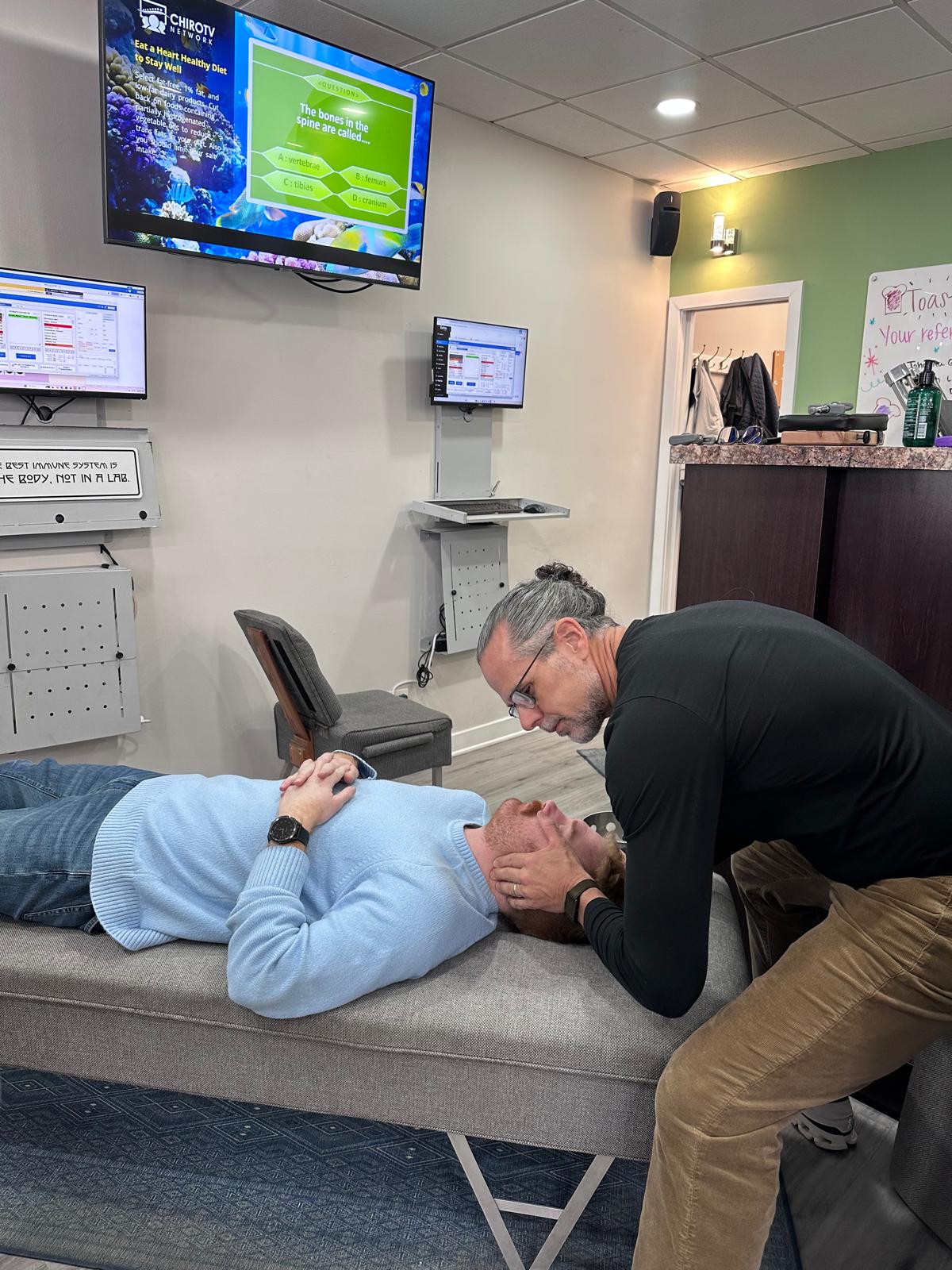
Why I Predict Sleep Improvements Before They Happen They came in for migraines. Or low back pain. Or sciatica. I tell them their sleep is going to improve in the first week, sometimes within days. They nod politely, maybe a little skeptical, because that’s not why they’re here. Then it happens exactly like I said […]