by McKinley Family Chiropractic
Share
by McKinley Family Chiropractic
Share
 As a chiropractic office that sees a large number of kids, we are often asked by new patients, “How does chiropractic care help babies and children? I thought you guys treated back pain.” While it is true that we do help people who have back pain, chiropractic care is much more than just that, especially when it comes to children. Many of the spinal problems seen in adults start as early as birth. Why is this? The answer is one word: stress.
Last month a mother brought her 4 month old child, Nick, into our office. She had been referred to us after visits to numerous pediatricians, gastroenterologists, and other specialists. You see, Nick wasn’t able to keep formula down after feedings. He would violently heave immediately following his bottle. As a result of this he was in the second percentile for weight at his age, and was experiencing severe mouth and gum inflammation due to the stomach acid. The specialists that his mom had taken him to were unable to find any cause for his problem. They examined his stomach and esophagus and couldn’t find anything wrong. And they were right. There wasn’t anything wrong with Nick’s GI tract. What was happening is that the nerve that ran to Nick’s esophagus and stomach was being affected by what is called a subluxation: an area where the bones that protect his spinal cord are interfering with the ability of signals to travel between the brain and their destination, in this case the stomach and esophagus. There wasn’t any thing wrong is Nick’s organs themselves, they just weren’t getting the right signals to tell them how to work properly.
So what causes subluxations like the one that was affecting Nick? Again we come back to that one word answer: stress. When we think of stress we think of the things that we deal with on an everyday basis: job, money, family, etc. Many times what we don’t see is that kids, infants, even fetuses in the womb, all undergo stress too!
From the moment of conception the child in the womb is susceptible to stresses. Some of them are evident; we all know that the mother shouldn’t smoke or drink, that she should eat healthy, that she takes the appropriate prenatal vitamins. Some stresses are not so easily seen though. The baby grows seven times faster in the womb than outside the mother’s body. Uterine constraint, not giving the baby the space to grow, places severe demands on mother and baby alike. It can lead to developmental problems, malposition, and breech presentation. Even the act of giving birth is very stressful to the baby. 12% of all vaginal births result in an upper cervical subluxation, the rate is even higher for more traumatic births such as forceps, c-section, and vacuum. These all lead to increased rates of SIDS, colic, asthma and more due to subluxation.
Typical, everyday activities can also place the child in danger. A recent study found that 23% of children suffered head and neck injuries in so called “near miss” accidents. The simple act of swerving or decelerating quickly can affect the child greatly. What we put in their bodies plays a role as well. The rate of asthma doubles for every dose of antibiotics before the age of 1. Even simple activities as diapering can lead to increased rate of constipation due to the stress placed on the lumbar spine.
So what does this mean for you, the parent? Be proactive in your kids’ health. Take steps to both minimize the stress in their life and to allow their body to properly handle what stress they do have. Chiropractic care is one of the tools that Nick’s mom chose. We’re happy to say that he hasn’t vomited in over 3 weeks and has started to gain weight! We invite you join us on March 3rd as we join with Active Moms Club to bring you an exciting presentation called “Raising Extraordinary Kids!”. We’ll walk you through our methods, from the womb to when they leave home, to make sure your kids are living stress free and not stressed out!
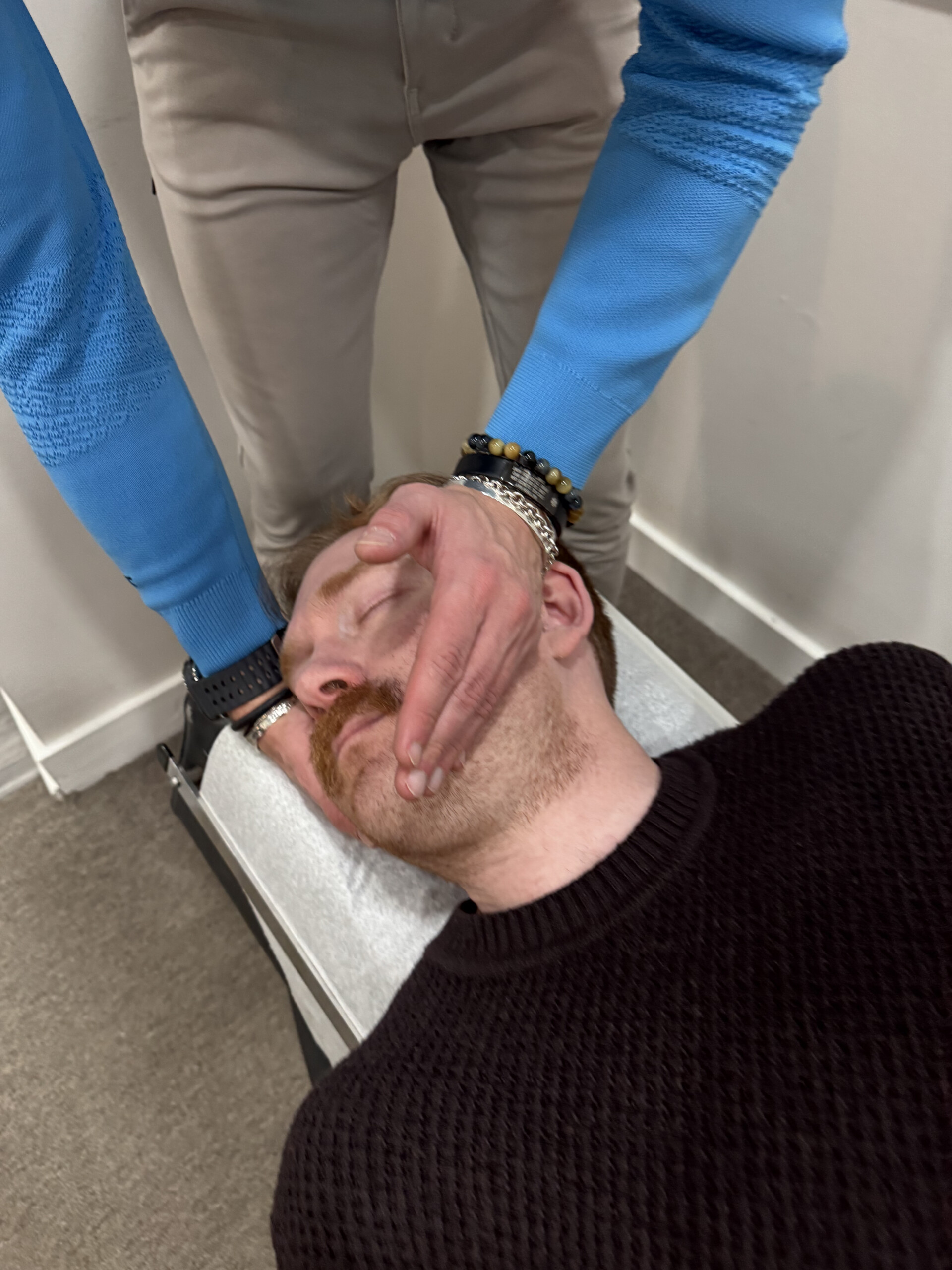
Why Your Neck Pain Keeps Coming Back I’ve been doing this for 25 years in North Center. When someone walks into my office with neck pain that keeps returning, they’re usually frustrated. Not just because of the pain itself, but because of what it’s preventing them from doing: playing with their kids without wincing, getting […]
Why Most Sciatica Patients Are Told to Wait When Diagnosis Should Come First Most sciatica patients are told to wait, take anti-inflammatories, and hope it gets better. If it doesn’t, they get sent to physical therapy. Then imaging. Then maybe a specialist who mentions cortisone or surgery. Here’s what almost never happens: someone asks why […]